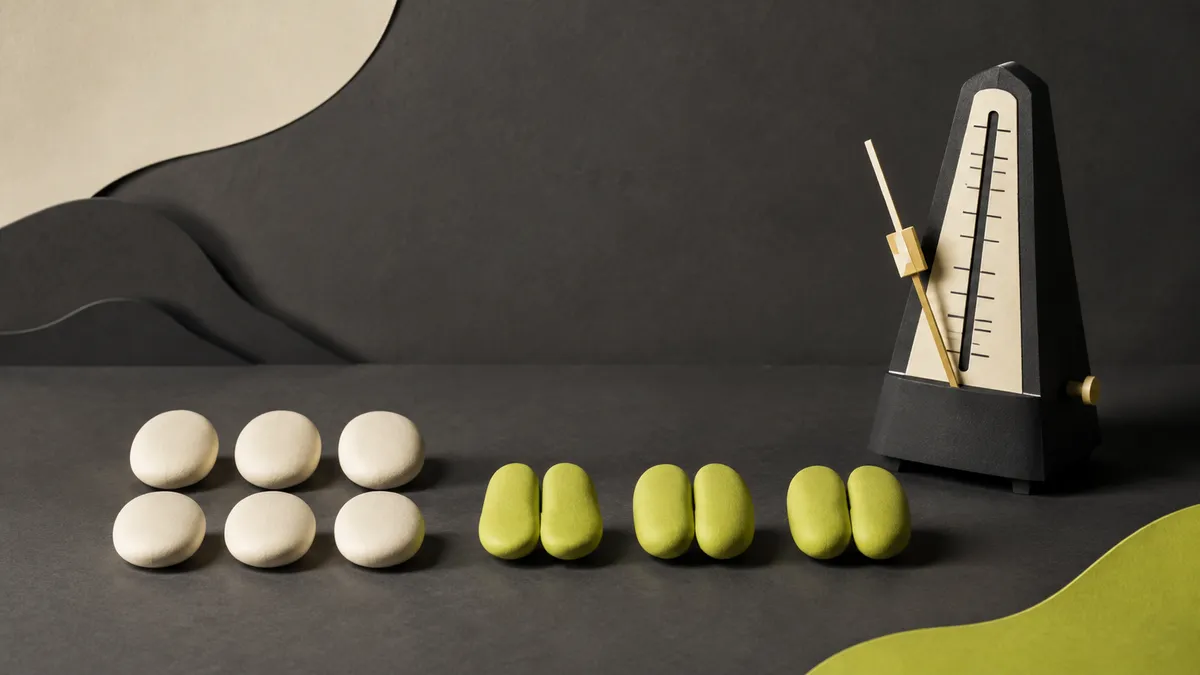
Count the same small units two ways
Six eighth-note subdivisions can be grouped as three pairs or two groups of three. In a typical three-four feel, the larger beats divide into pairs: one and, two and, three and. In a typical six-eight feel, two larger beats each divide into three: one two three, four five six. Speak both groupings while tapping the larger pulses. The number of small events alone does not identify the meter; their organization and emphasis create the practical difference you need to hear.
Listen beyond a single instrument
A guitar pattern may cross the beat grouping or place accents in unexpected locations. Listen to the bass, drums, melody, and phrase endings together before deciding. Tap the pulse that feels sustained across several measures and notice where the strongest arrivals recur. If both groupings seem possible, slow your analysis down without changing the audio and compare a longer passage. Some music deliberately creates ambiguity or shifts its emphasis. You do not need to force certainty from a single bar that was designed to feel rhythmically unsettled.
Six taps, two competing accent patterns
Tap six equal events on a table. For 3/4, accent events one, three, and five while counting one-and, two-and, three-and. For 6/8, accent events one and four while counting one-la-li, two-la-li. Keep the small taps at the same speed during this comparison. There are six eighth-note units in either demonstration, but one has three larger beats and the other two. Do not compare the numbers on a metronome until you know which note value each number represents.
Make an original two-bar accompaniment on Am followed by E. In 3/4, play a low note on beat one and light chords on beats two and three. In 6/8, play a low note on the first large beat and a light chord on the second, letting each span three subdivisions. Hum the same six-note fragment A–B–C–B–A–G sharp across each bar. Its pitches have not changed, but the stronger positions now land on different notes. This is why counting only melodic notes can mislead you.
Test the grouping through accompaniment
Play one chord with a clear three-beat pattern, then with two larger pulses divided into three. Compare each against the recording and listen for which one supports the phrase naturally. Once you choose a working meter, count the chord durations and verify the changes in your AudioChords chart. The chord names will not tell you the meter by themselves. Use the grouping to plan accents, breathing, and entrances. A useful meter decision should make the music easier to follow and rehearse, not merely assign a notation label while your accompaniment continues to emphasize the wrong pulses.
What to do when both counts seem possible
If a song resists your first count, compare at least two complete phrases rather than replaying one accented hit. A drummer may emphasize an offbeat, a guitar may use a cross-pattern, and slow 6/8 can invite you to tap every subdivision. Ask whether your chosen large pulse remains useful through the vocal entrance and cadence. AudioChords can help you locate chord changes, but those labels are not a meter diagnosis. Write your working count beside the chart and revise it if it consistently forces awkward entrances. Some passages support more than one sensible notation; the practical goal is a shared count that the players can maintain.